
iOS 18.2 will let EU users delete App Store and Camera apps
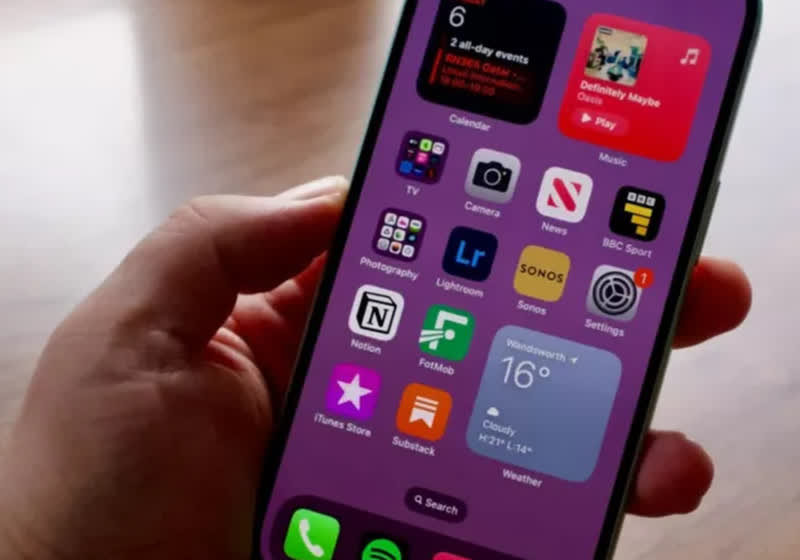

The move is part of Apple's effort to comply with the EU's Digital Markets Act antitrust regulations. One of the DMA's requirements is that tech giants must allow users to easily remove any pre-installed apps they don't want. Apple confirmed this change back in August, and now we're finally seeing...

Read Entire Article


from TechSpot https://ift.tt/PvVQJrF
via

Comments

Popular posts from this blog

When the clocks change for Daylight Saving Time, and why we do it at all

The clocks on our smartphones do something bizarre twice a year: One day in the spring, they jump ahead an hour, and our alarms go off an hour sooner. We wake up bleary-eyed and confused until we remember what just happened. Afterward, "Daylight Saving Time" becomes the norm for about eight months (And yes, it's called "Daylight Saving" not "Daylight Savings." I don't make the rules). Then, in the fall, the opposite happens. Our clocks set themselves back an hour, and we wake up refreshed, if a little uneasy.  Mild chaos ensues at both annual clock changes. What feels like an abrupt and drastic lengthening or shortening of the day causes time itself to seem fictional. Babies and dogs demand that their old sleep and feeding habits remain unchanged. And more consequential effects — for better or worse — may be involved as well (more on which in a minute). Changing our clocks is an all-out attack on our perception of time as an immutable law of ...

A speeding black hole is birthing baby stars across light years

Astronomers think they have discovered a supermassive black hole traveling away from its home galaxy at 4 million mph — so fast it's not doing what it's notorious for: sucking light out of the universe. Quite the opposite, possibly. Rather than ripping stars to shreds and swallowing up every morsel, this black hole is believed to be fostering new star formation, leaving a trail of newborn stars stretching 200,000 light-years through space . Pieter van Dokkum, an astronomy professor at Yale University, said as the black hole rams into gas, it seems to trigger a narrow corridor of new stars, where the gas has a chance to cool. How exactly it works, though, isn't known, said van Dokkum, who led research on the phenomenon captured by NASA 's Hubble Space Telescope accidentally. A paper on the findings was published last week in The Astrophysical Journal Letters . “What we’re seeing is the aftermath," he said in a statement . "Like the wake behind a ship, we’r...