Max Q: Only a matter of time
Hello and welcome back to Max Q!
In this issue:
- Intuitive Machines enters the public market
- Silicon Valley goes to war
- News from Transcelestial, Umbra and more
Intuitive Machines’ public market debut marked by large shareholder redemptions but sharp stock highs
Lunar technology company Intuitive Machines received far less cash from its merger with a special purpose acquisition company (SPAC) than it forecasted, but despite this rocky start the stock price saw major highs last week.
Although Intuitive Machines said the SPAC trust could furnish the company with as much as $301 million in dry powder, shareholders opted to redeem a staggering $279.8 million prior to the transaction closing. The redemptions could reflect a relative weariness amongst investors of SPACs, which saw a huge upswing in popularity in the past few years but have more recently fallen out of favor as post-SPAC companies struggle to stay afloat in the public market.
But perhaps those shareholders are regretting getting their money back. The company’s stock closed at $10.03 on its first day of trading Tuesday, and surged to $39.73, up 211%, on Thursday.
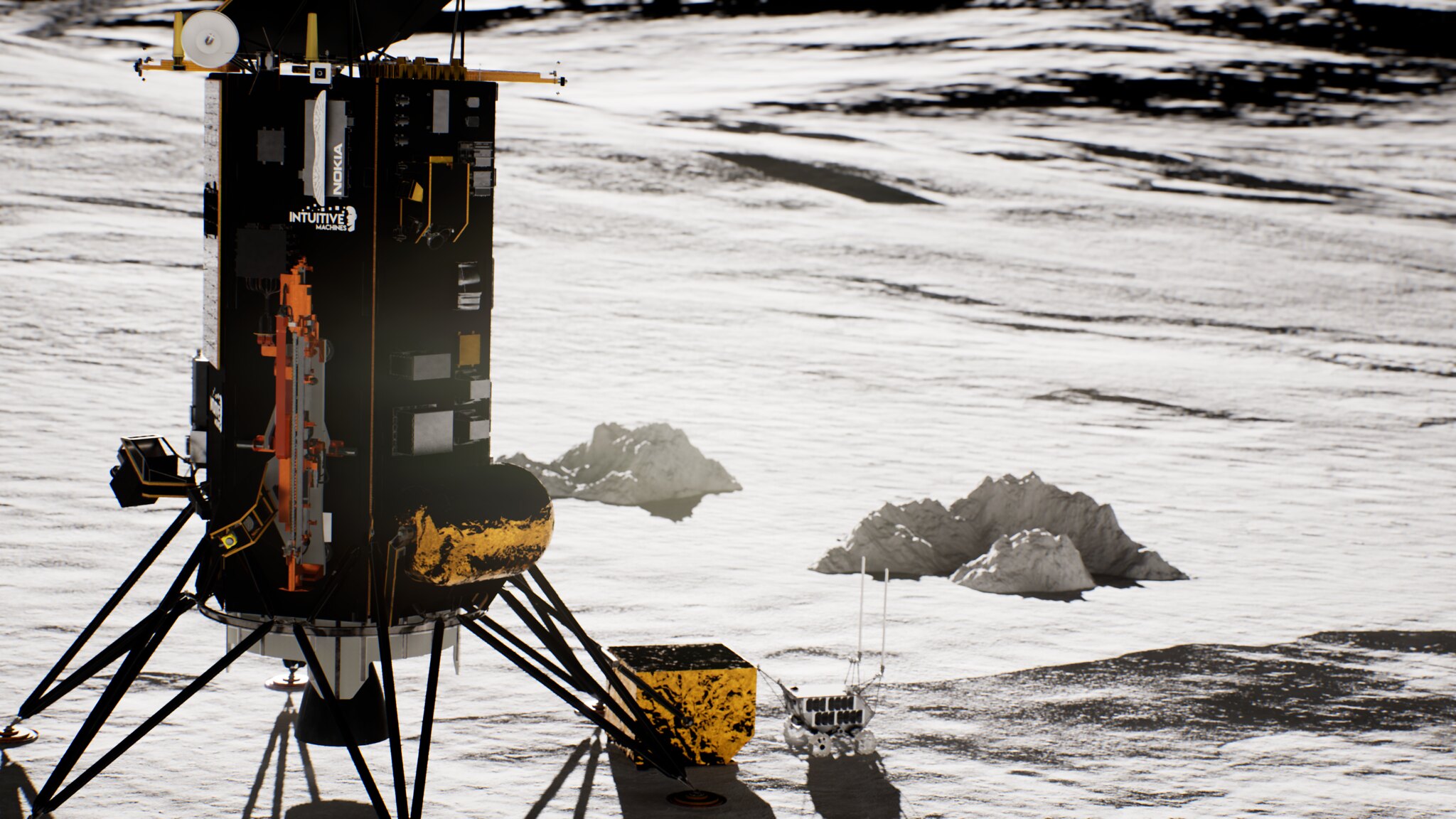
Intuitive Machines rendering lunar lander. Image Credits: Intuitive Machines
Silicon Valley goes to war
For TC+, I wrote about the uptick in defense tech investments over the past few years.
Just a few years ago, many investors thought that cutting a check for a defense-first startup was a proposition that simply didn’t make sense. The tides have clearly shifted, and PitchBook data supports this warming to defense tech. From January to October last year, VC-backed firms injected $7 billion into aerospace and defense companies, a massive growth that stands in sharp contrast to the relative sluggishness in other sectors.
There are many reasons for this uptick in interest in defense tech, but driving all of them is a new, realist vision that’s spread among some technologists and venture capitalists. It sees global antagonisms threatening the stability of Pax Americana; it sees the United States rotting from the inside out due to bloat and lethargy. As a result, the Silicon Valley mentality has returned to its defense roots, embracing the role that venture-funded startups can play in maintaining America’s military dominance and technological supremacy around the world.
“If you believe in democracy, democracy demands a sword,” a16z general partner David Ulevitch said in a recent interview with TechCrunch. And Silicon Valley will be where it is forged.

Image Credits: Kiyoshi Tanno / Getty Images
More news from TC…
- Near Space Labs CEO Rema Matevosyan sat down with TechCrunch to explain what, exactly, was up with that alleged Chinese spy balloon. (TC)
- SpaceX faces a $175,000 fine to the Federal Aviation Administration for not reporting certain data to the agency prior to a Starlink launch last August. (TC)
- Transcelestial, a startup based in Singapore, scored $10 million to expand its wireless laser communications system across parts of Southeast Asia. (TC)
- Virgin Orbit’s Start Me Up mission was bungled by a faulty fuel filter and fuel pump in the second stage’s engines. (TC)
…and beyond
- Astranis was awarded a $4.5 million Phase III SBIR contract with the U.S. Space Force to integrate tactical waveform technology into its spacecraft, with a $6 million option for an orbital demonstration using a future Astranis satellite. (Astranis)
- Blue Origin quietly announced a program, Blue Alchemist, that’s been at work for at least two years developing tech to turn lunar regolith into solar cells and electricity transmission wires. (Blue Origin)
- India successfully launched the new SSLV rocket, six months after the first launch attempt ended in failure. (NASA Spaceflight)
- Japan Aerospace Exploration Agency scrubbed a launch of its new H3 rocket at T-0. (Reuters)
- Launcher’s first spacecraft, Orbiter SN-1, stopped operating after the craft was unable to generate power from its solar panels. (Launcher)
- Maxar and Umbra announced a new partnership this week, which will see Umbra’s synthetic aperture radar data combine with Maxar’s optical imagery in a combined offering for customers. (Maxar)
- SpaceRyde, a Canadian launch company that was developing a vehicle that used a balloon first stage, has filed for bankruptcy. (Payload)
- SpaceX has sold the two oil rigs it purchased back in 2020, which were to be converted into offshore launch platforms for Starship. (SpaceNews)
Max Q is brought to you by me, Aria Alamalhodaei. If you enjoy reading Max Q, consider forwarding it to a friend.
Max Q: Only a matter of time by Aria Alamalhodaei originally published on TechCrunch
from TechCrunch https://ift.tt/Wtxg1mv
via https://ift.tt/XDxqcgL


Comments
Post a Comment